Bottom Line Up Front
I completed the 2026 Bataan Memorial Death March at White Sands Missile Range in the civilian light category. My Apple Watch logged 15.09 miles in just under five hours of workout time, and while this was not the hardest thing I have ever done, it was still a real challenge at this stage of life. What stayed with me most was not the distance, but the reason for the march itself.
I have not blogged in a while, but this felt worth documenting.
The Bataan Memorial Death March is not just another endurance event. It is a memorial. It is organized, well run, and deeply rooted in history, but underneath all of that is a weight that is hard to explain unless you are there in person. You feel it in the signs, the ceremony, the people, the memorial bibs, and the silence that sits underneath all the movement.
This is simply my take on the 2026 event.
Packet Pickup Was Smooth and Professional
We went in on Friday morning to pick up the packet, and the process was smooth from start to finish. This was the 37th annual event, and it showed. Nothing felt improvised. The staff and volunteers clearly knew the routine, and the whole thing moved with the kind of efficiency you only get from an event that has been refined over many years.
After packet pickup, you move beyond the sponsor and shopping area, and that is where the tone changes. There were displays, memorabilia, and historical reminders tied to the actual survivors and the legacy behind the march. That part hit differently. It takes the event out of the category of “fitness challenge” and puts it where it belongs: remembrance.
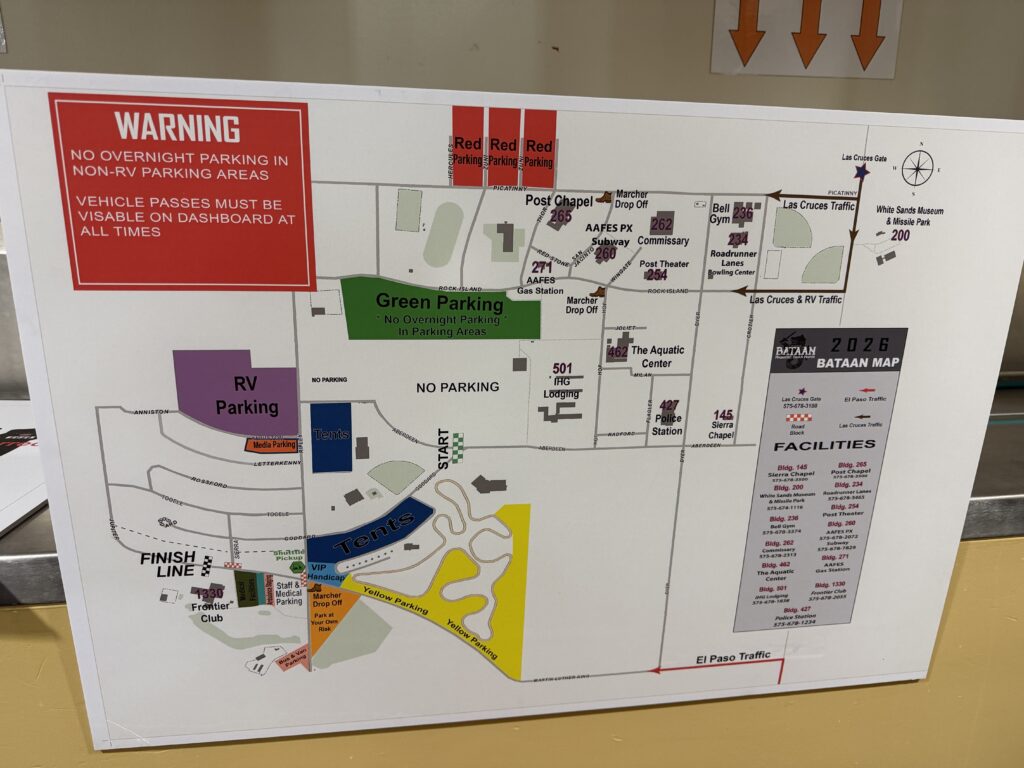
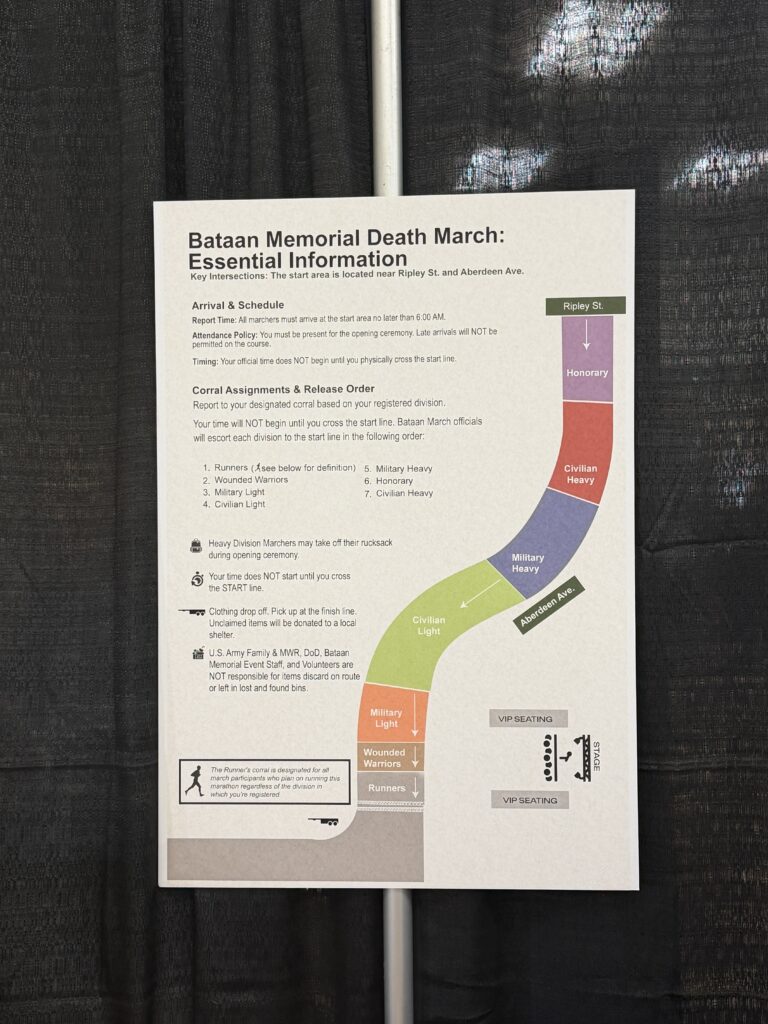
There were also clear visuals showing the three-day event schedule, the post map, and where each category needed to line up on Aberdeen Avenue. I know a lot of that information is already available online, but seeing it all in person helped make the scale of the event feel real.
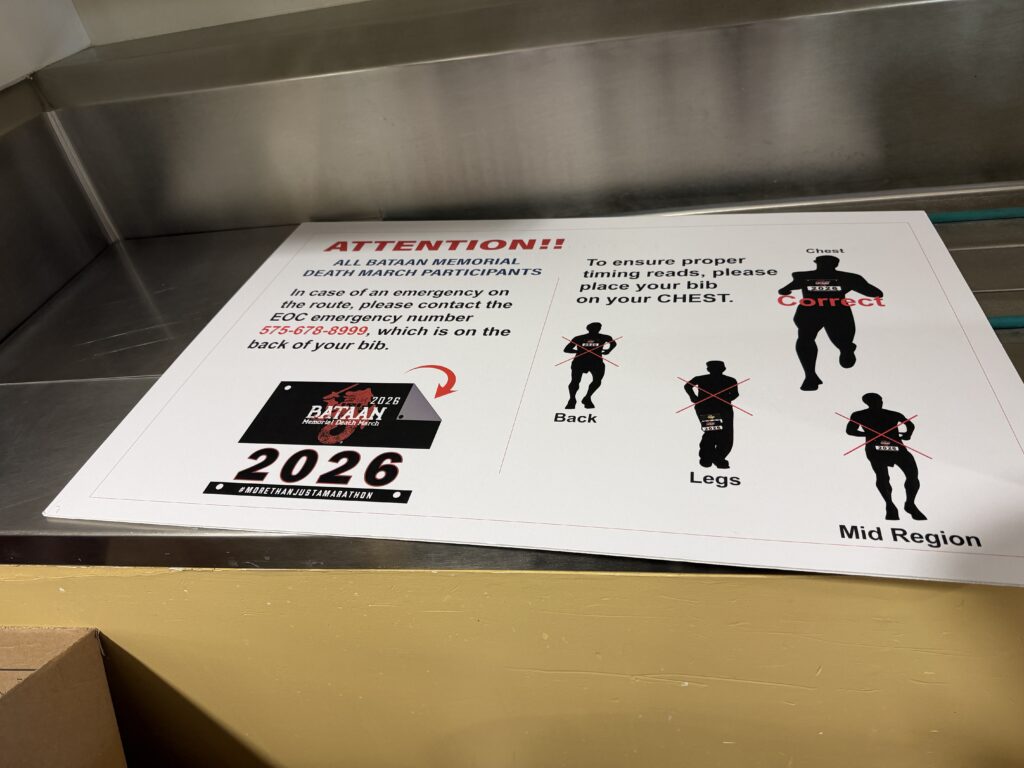
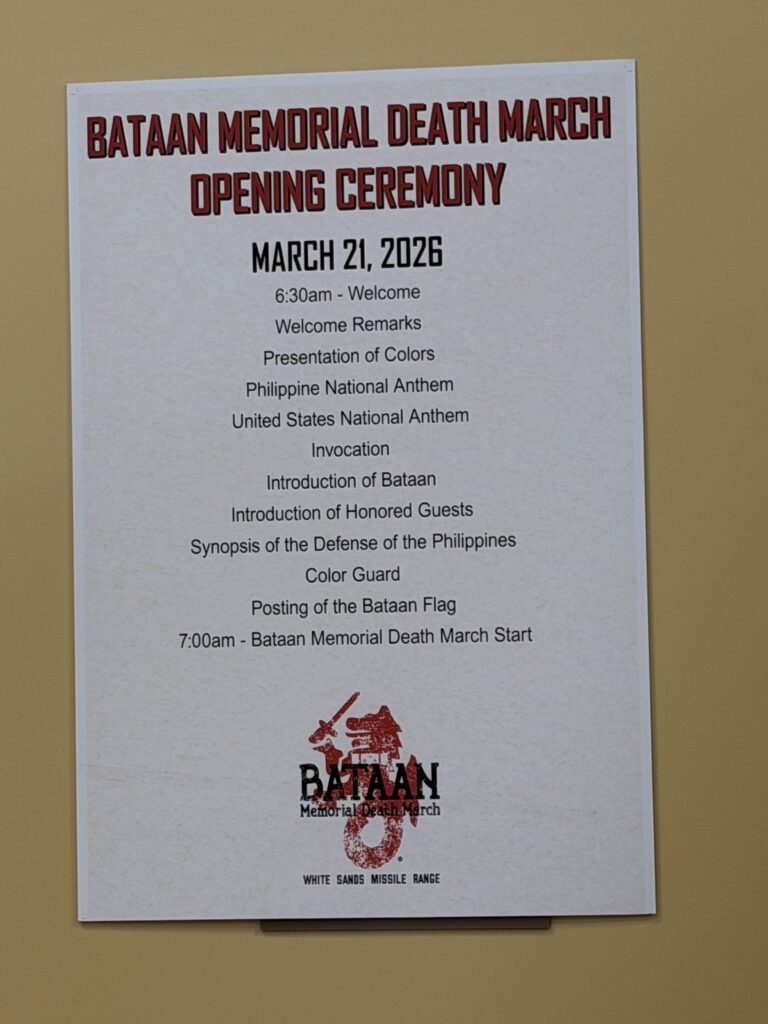
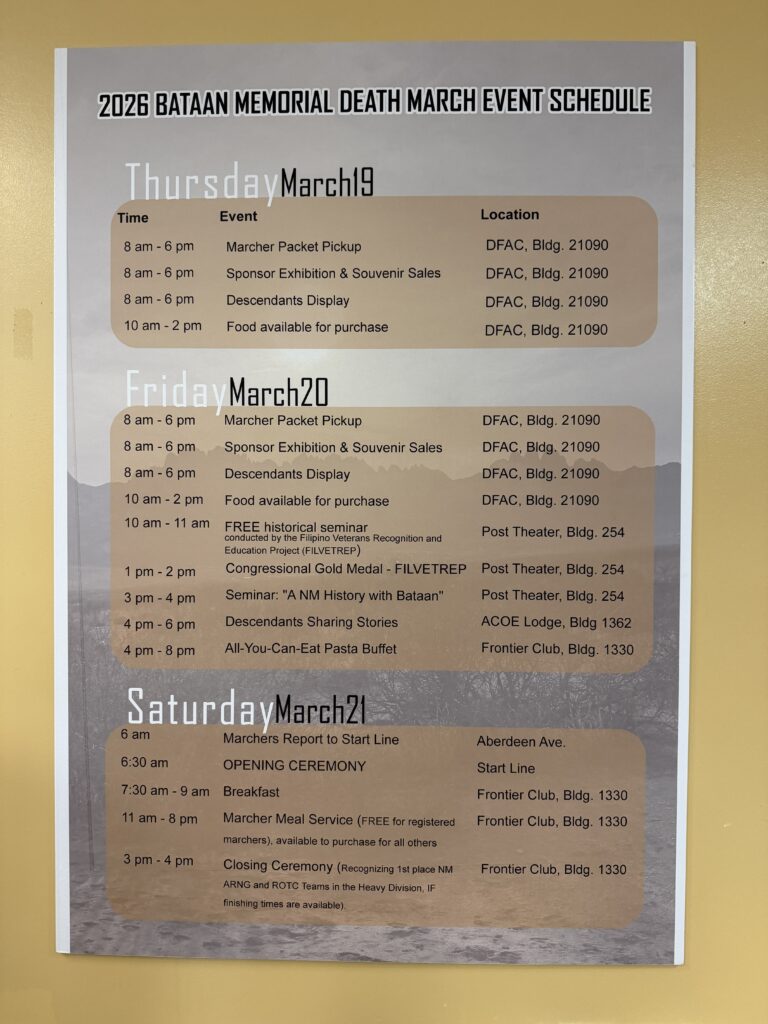
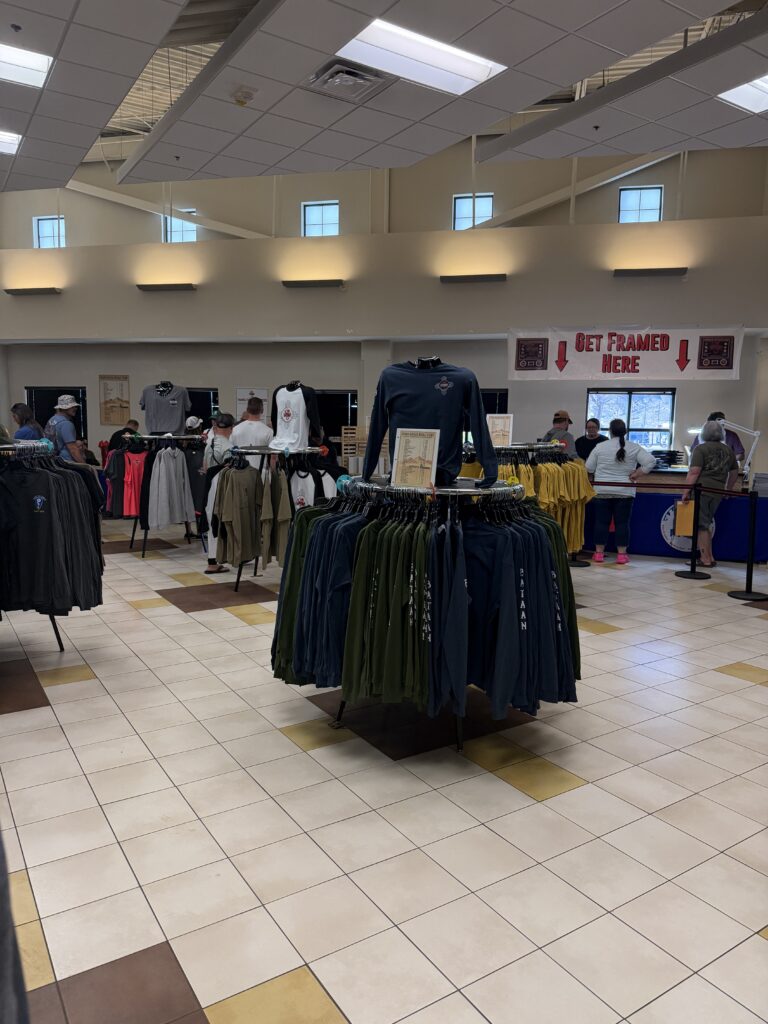
Early Morning Start at White Sands
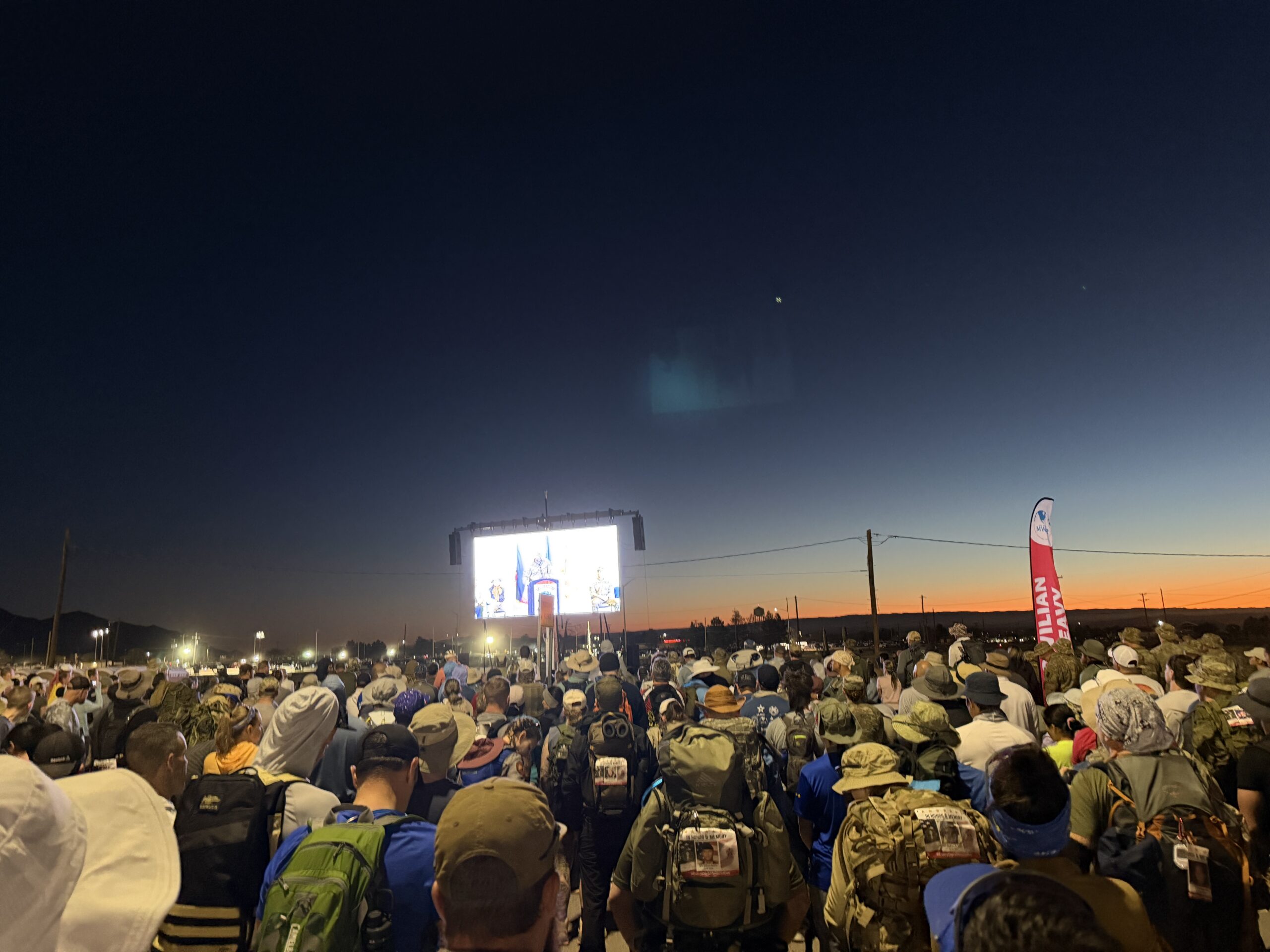
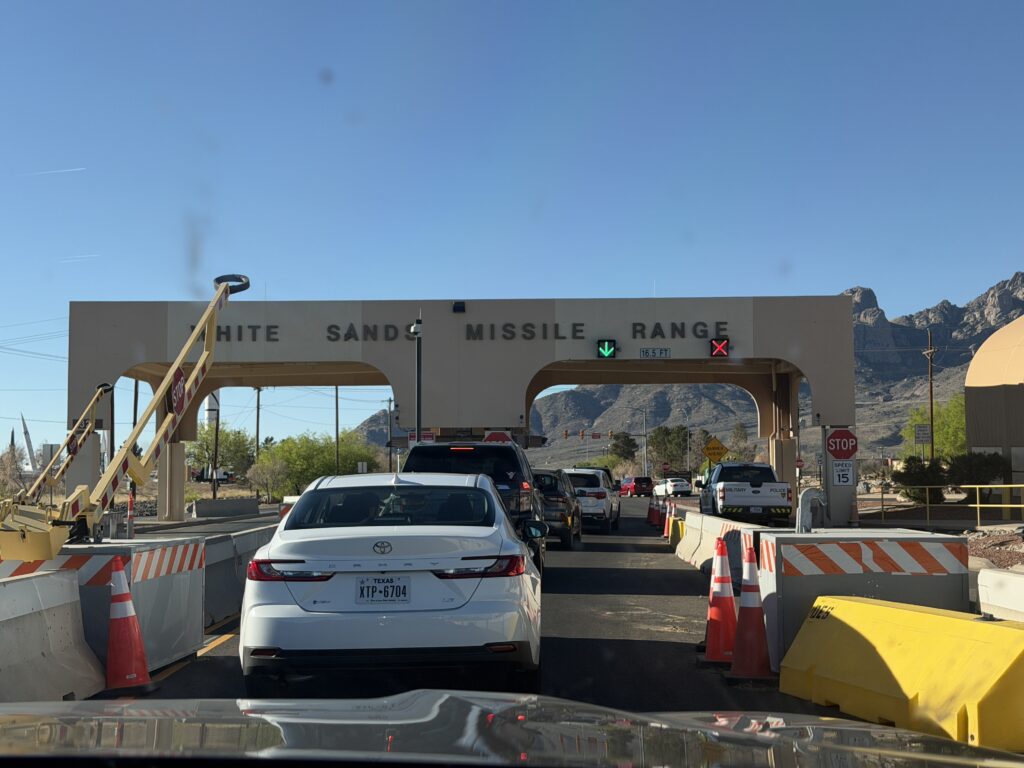
We stayed in Las Cruces, New Mexico, and woke up at 3:45 in the morning. The drive to White Sands Missile Range took about half an hour. We were through the gate and parked at roughly 5:30 a.m., which gave us enough time to get oriented, bathroom etc. without rushing.
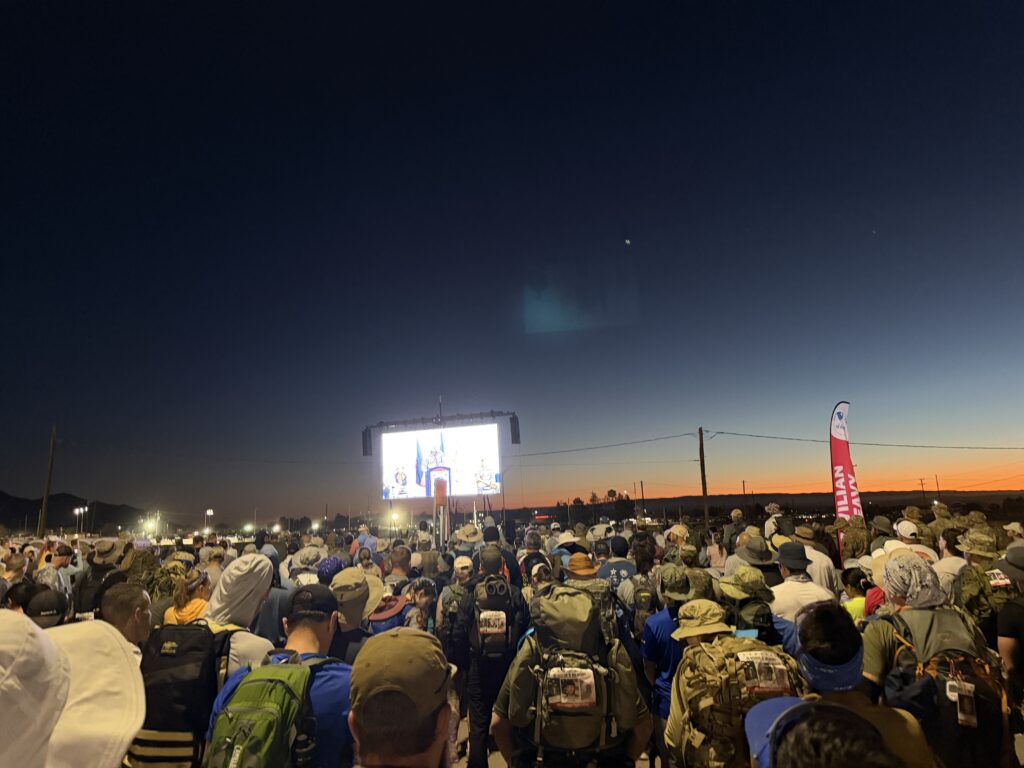
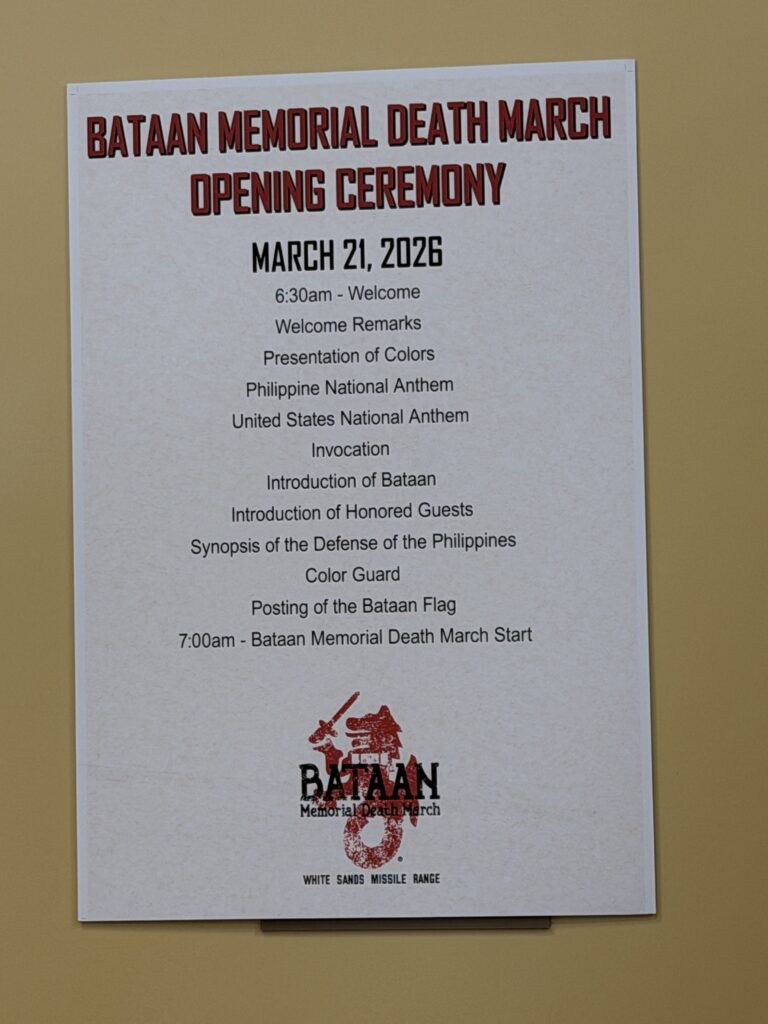
The opening ceremony began at 6:30 a.m., and the march started at 7:00 a.m. The early morning darkness, the crowd, the ceremony, and the sound of everything getting ready created the kind of atmosphere that makes you realize this is bigger than your own finish time.
The Walk Itself
I did the civilian light category. This was not one of the hardest things I have ever done in my life given my background, but at my current age it was still a challenge. That is the honest answer.
We met our goal of roughly a 20-minute mile and finished before the worst of the heat really took over. By around 10:00 a.m., you could already feel the desert heat working through your clothes. That part was real. Even if your legs are holding up, the environment starts taking its own toll.
What stood out to me on the course was that the event was well organized. Water points were where they needed to be. The support was there. Nothing felt chaotic. It was demanding, but it did not feel neglected.
My Walk Stats
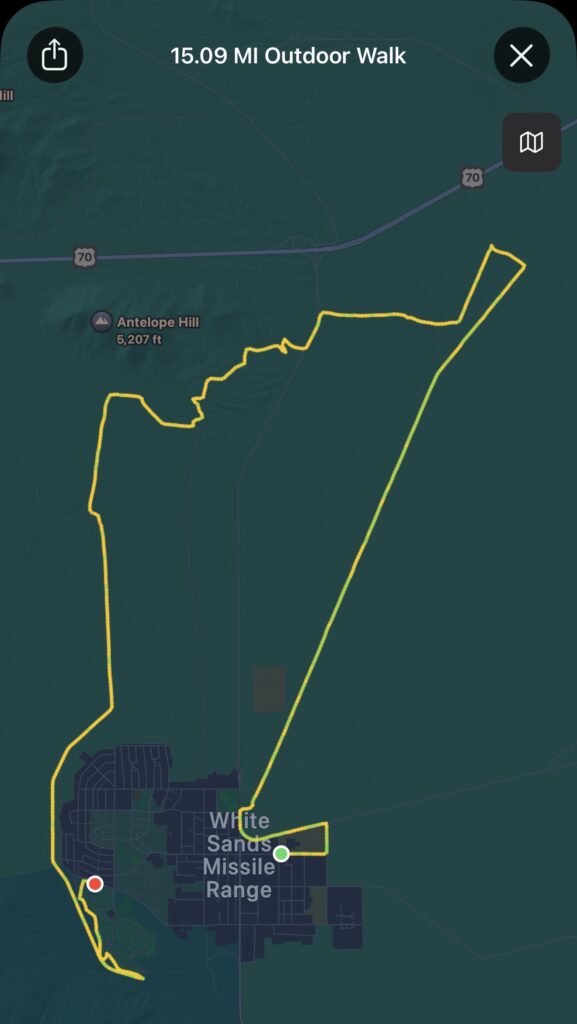
- Distance logged: 15.09 miles (forgot to start the watch LOL)
- Workout time: 4:55:57
- Elapsed time: 5:11:21
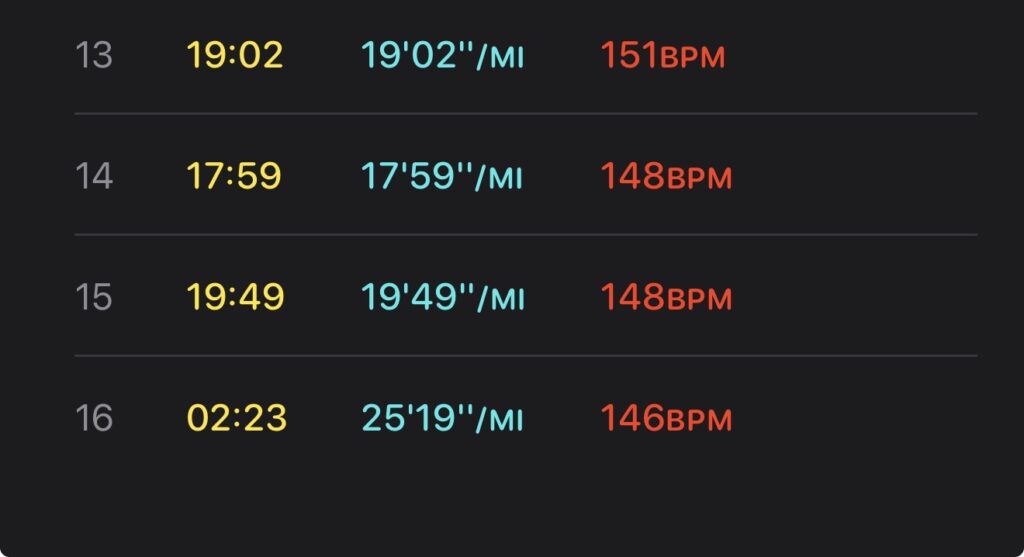
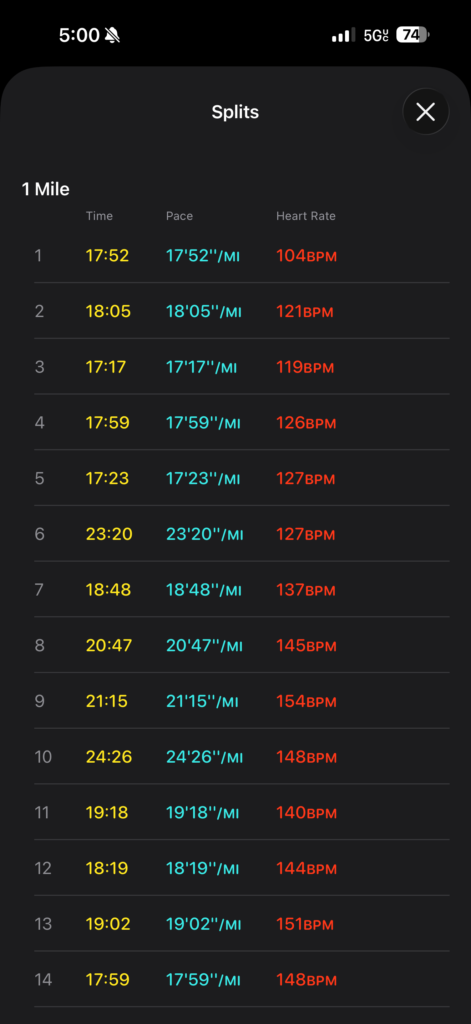
- Average pace: 19’36” per mile
- Average heart rate: 137 BPM
- Elevation gain: 844 feet
Looking back at the splits, you can see the grind of the day. Some miles were steady, some slowed down, and the heart rate gradually climbed. That is what a long event like this looks like in real life. It is not dramatic every second. It is just a long chain of decisions to keep moving.
Who I Marched For
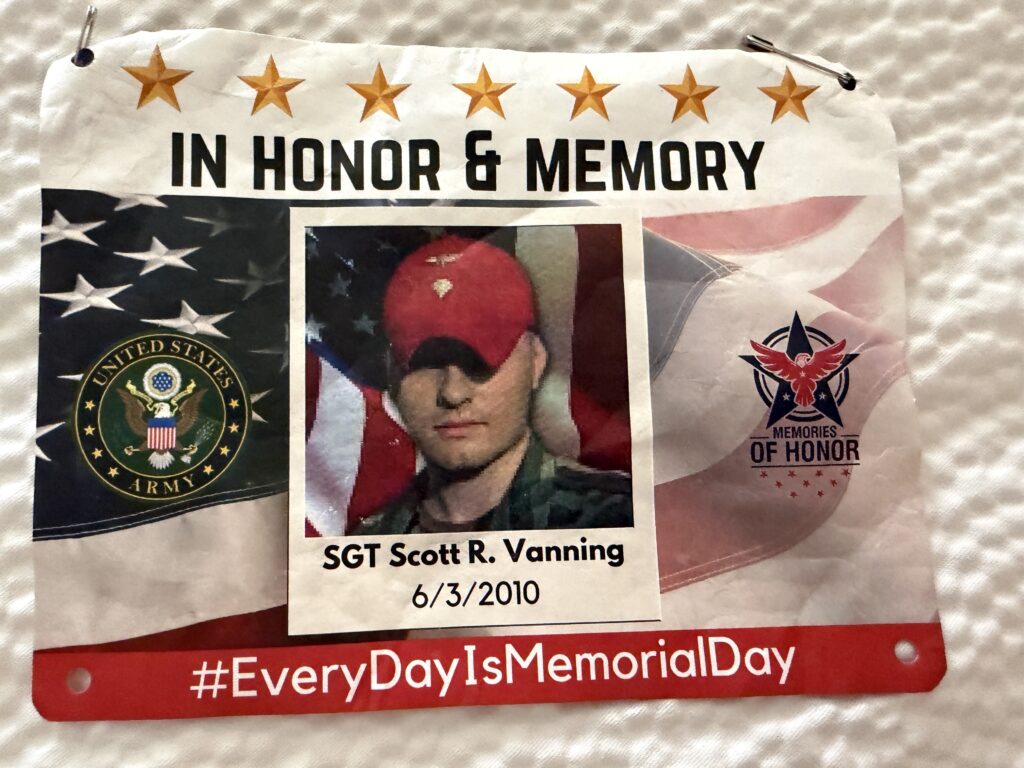
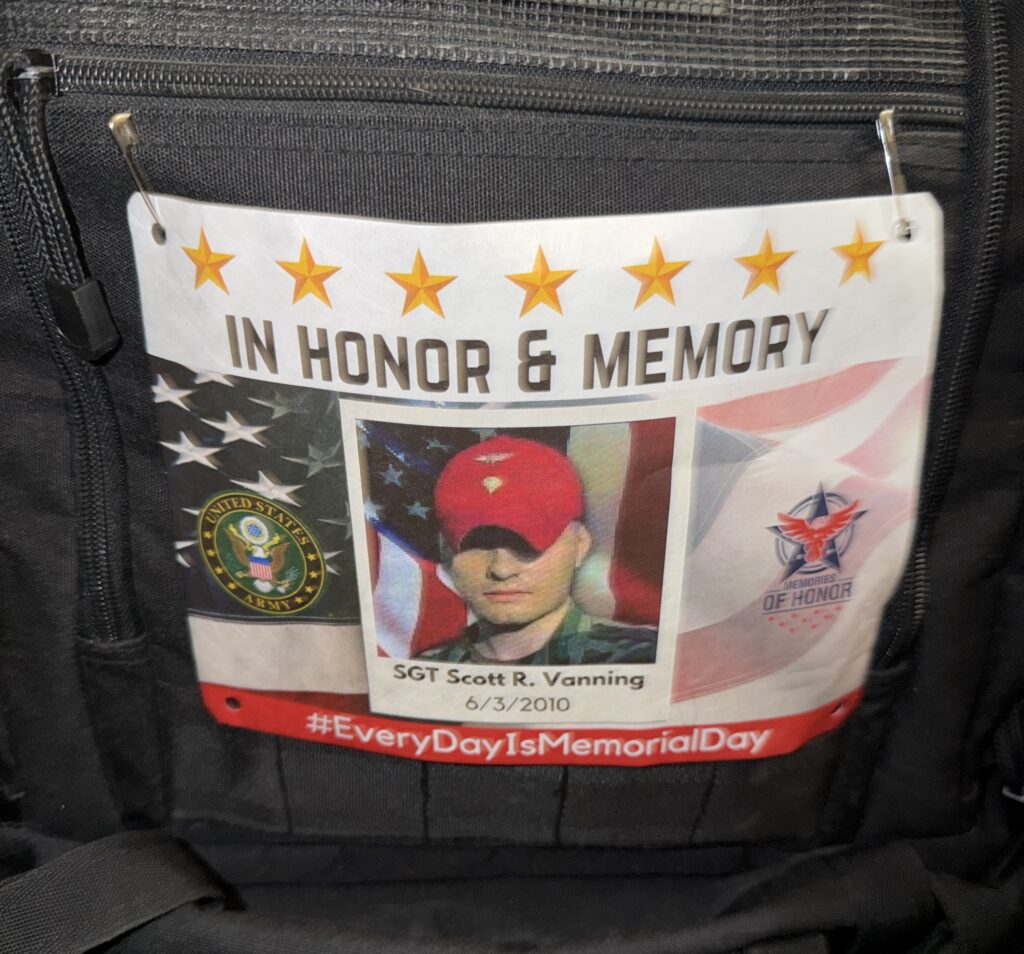
Friday night, before the march, I found myself curious about the soldier on my memorial bib. I went looking and found more information through a Library of Congress interview connected to his family. I learned that the soldier I was marching for was a rigger, which fit with the red hat in the photo. I also learned that he died by suicide at the age of 25.
That changed the march for me.
At that point, this was no longer just a physical event on a Saturday morning. It became personal in a different way. I was not only walking a course. I was carrying the memory of someone whose life ended far too early.
I do not need to overstate that part. It was emotional, and I wanted to honor his memory well.
The Finish and Recovery
We accomplished the goal. We finished. That alone made the trip worth it.
It took me about two days to recover, which tells you plenty about where I am physically these days, but I had no blisters. That was not luck. That was old-school preparation.
My foot-care tip was simple: nylons under wool socks. That is an old road march and Ranger School trick, and for me it still works. Sometimes the older methods stick around because they are effective.
Practical Tip
If you are doing an event like this and your main concern is foot damage, do not ignore sock setup. My combination of nylons under wool socks helped me finish with no blisters.
Would I Recommend It?
Yes, I would.
I would recommend it to people who want a meaningful challenge, especially if they understand that this is not just about distance. It is about memory, service, sacrifice, and showing up for something larger than yourself.
If you are expecting a polished race weekend built entirely around personal achievement, that is not really the point. If you are willing to walk into something with a little humility and support the broader community around it, then it is absolutely worth doing.
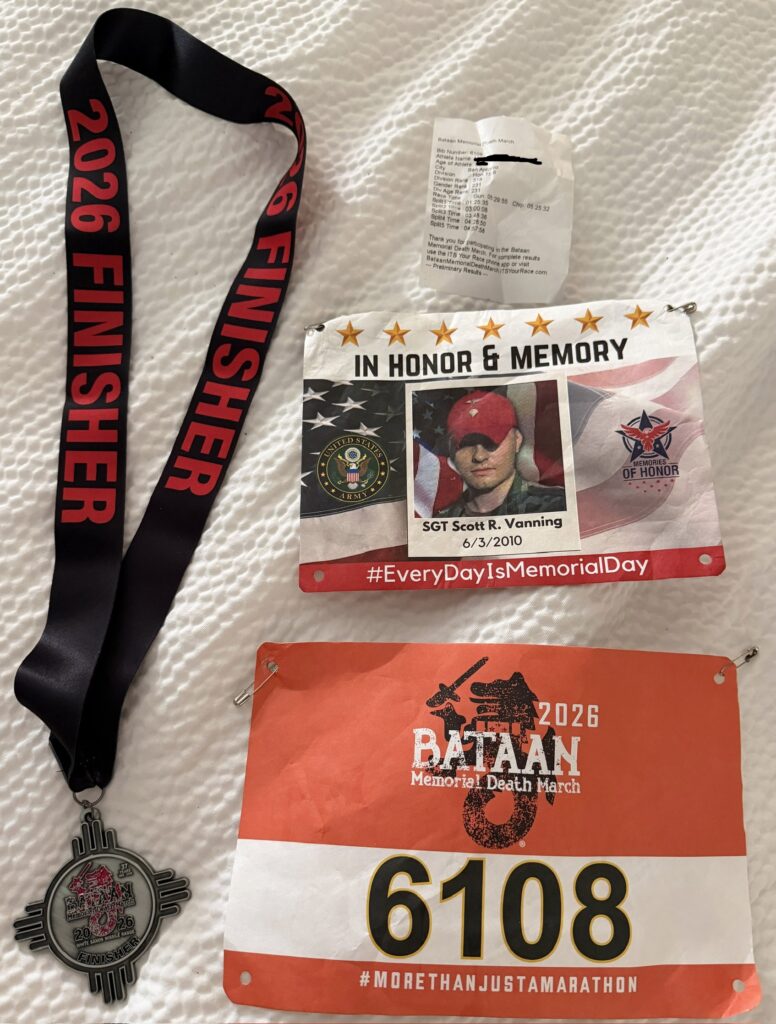
For me, the strongest part of the experience was not the medal, the stats, or even the finish. It was the reminder that remembrance takes effort too.
That is what I will remember most.